Sale!
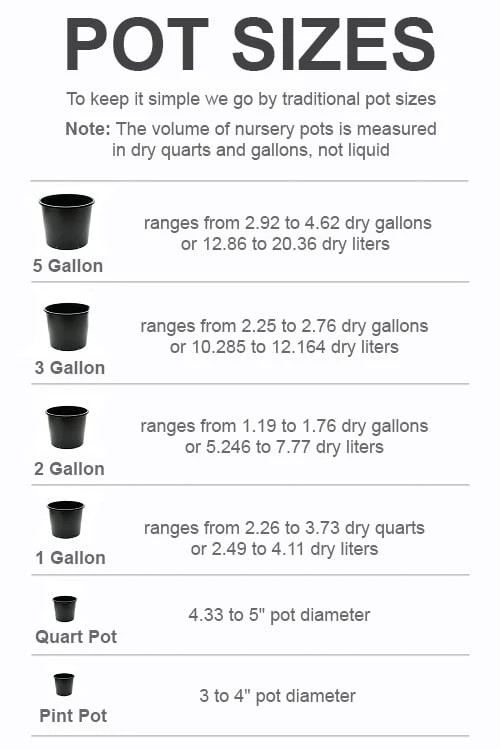
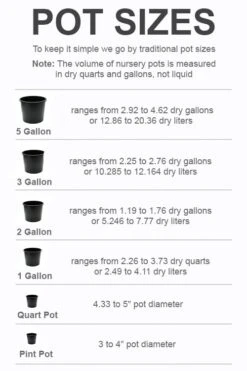
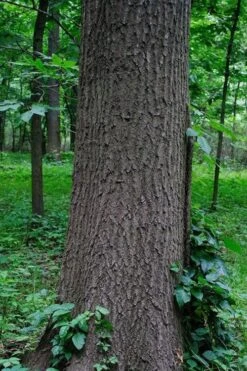
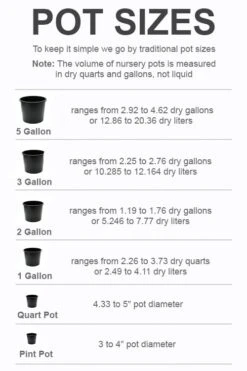
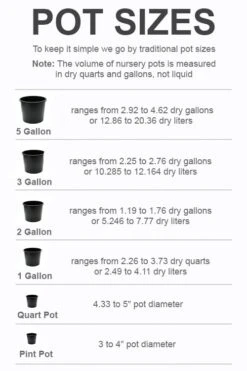
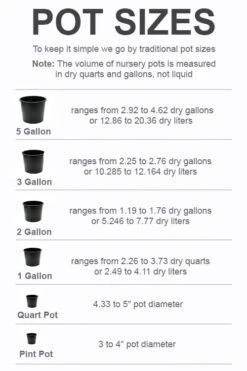
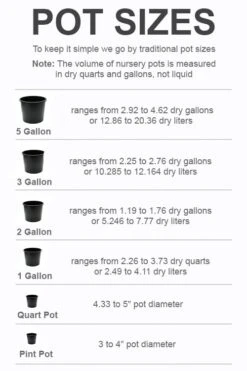
American Elm Tree (Ulmus Americana) – 3 Gallon Pot
Original price was: $74.97.$52.48Current price is: $52.48.
- Shop with Confidence, Pay Safely
- Quality products, fair prices.
- Your Security is Our Promise
- Streamlined service, designed for your convenience.

American Elm
Ulmus americana
Other Common Names: Common Elm, Gray Elm, Soft Elm, Water Elm, White Elm
Plant Details
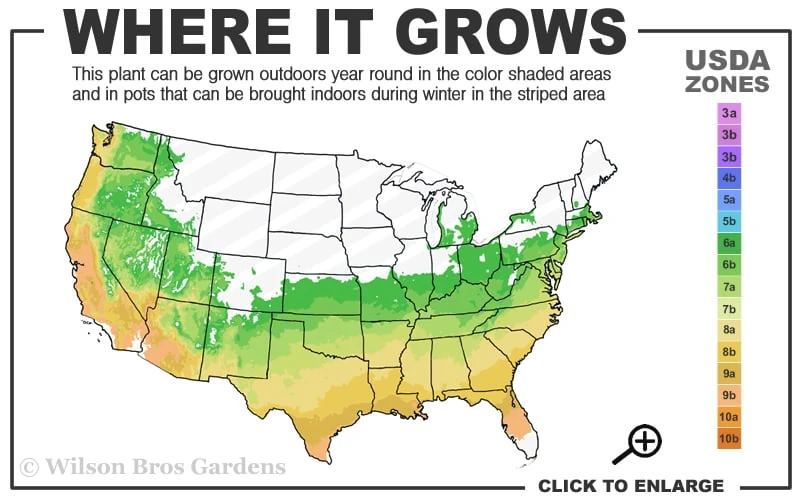
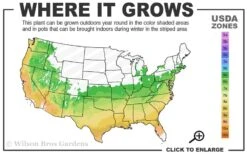
USDA Plant Hardiness Zones: 2a-9b Find Your Zone
Shrub Type: Deciduous Tree
Height at Maturity: 60-80′
Width at Maturity: 40-60′
Spacing: 65+ feet for space between trees
Growth Habit / Form: Upright Rounded Vase
Growth Rate: Very Fast, 3-4′ per year
Flower Color: Greenish Red
Flower Size: Small, Insignificant
Flowering Period: Winter
Flower Type: Drooping clusters
Fragrant Flowers: na
Foliage Color: Deep Green to Golden Yellow shades in fall
Fragrant Foliage: No
Fruit: Samaras
Sun Needs: Full Sun to Mostly Sun; 6 hours or more of direct sunlight per day is suggested
Water Needs: Average; drought tolerant when established
Soil Type: Clay, Loam, Sandy, Silty
Soil Moisture / Drainage: Moist But Well-Drained; High drought tolerance when established
Soil pH: 5.5–8.0 (Acid)
Maintenance / Care: Low
Attracts: Birds, Butterflies, Mammals, Moths
Resistances: Cold Temperatures (-10F), Deer, Disease, Drought (when established), Dry Soil (when established), Heat, Humidity, Pollution (Air), Poor Soil
Description
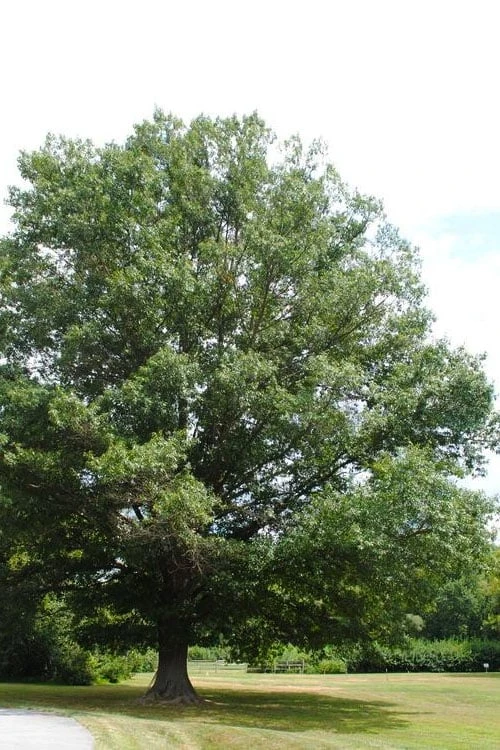
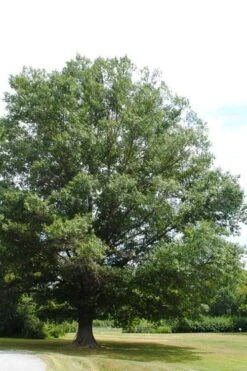
A super fast growing North American native tree with a refined character, the American Elm can reach a height of 60 to 80 feet tall and 30 to 60 feet wide at maturity.
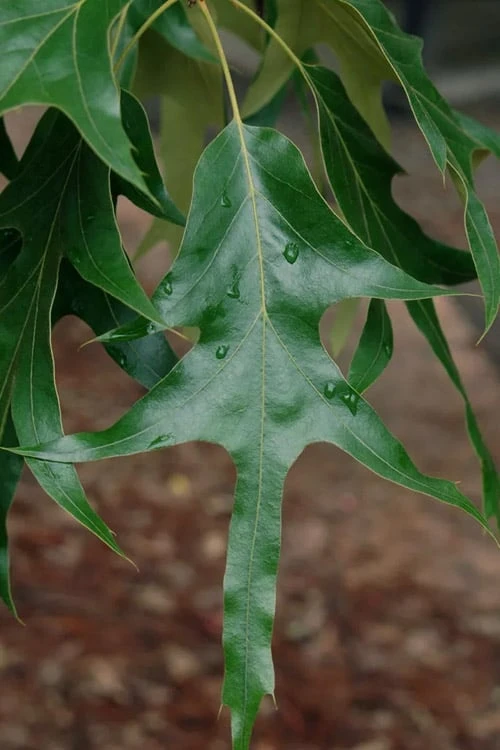
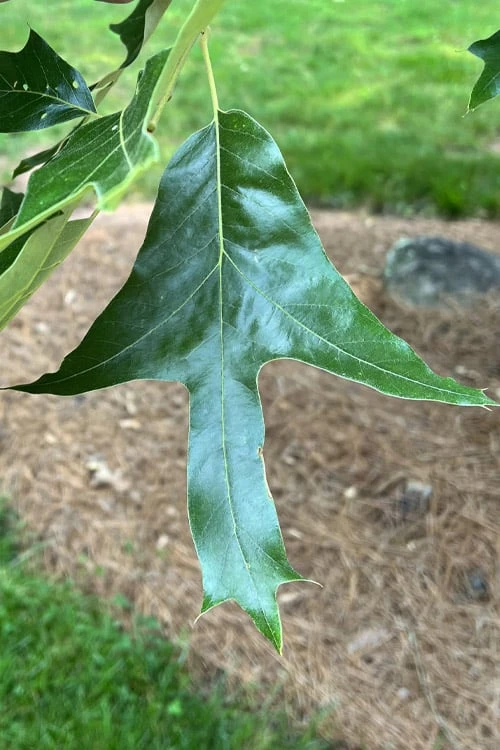
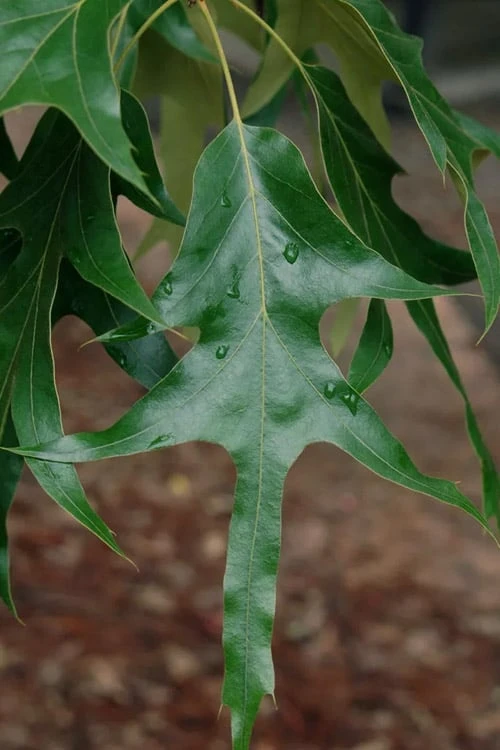
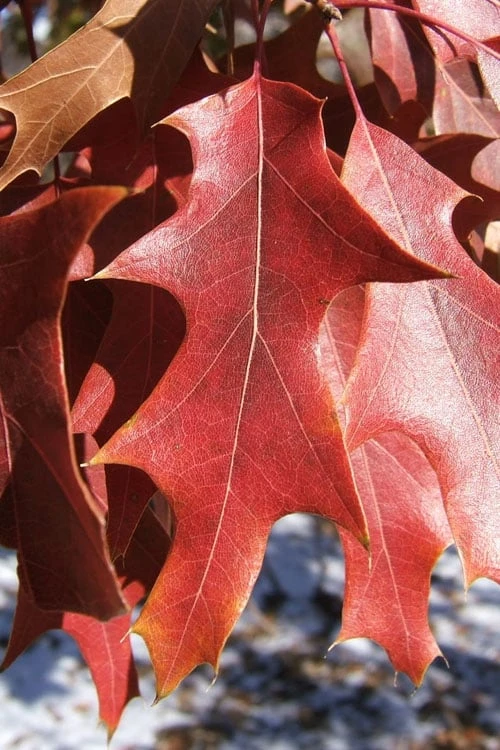
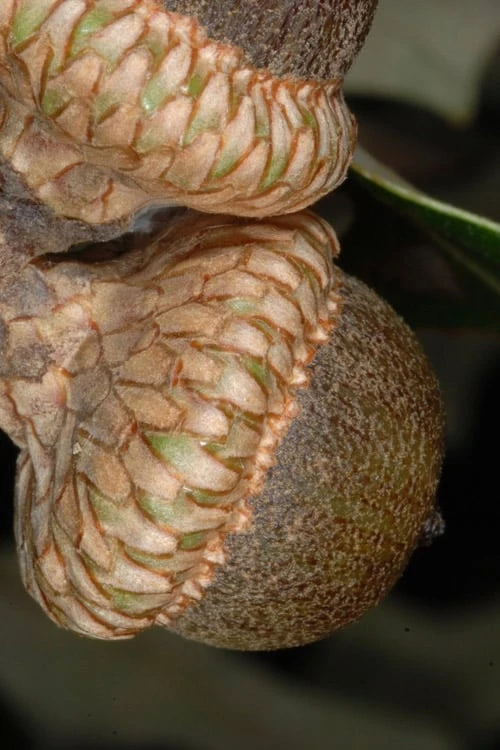
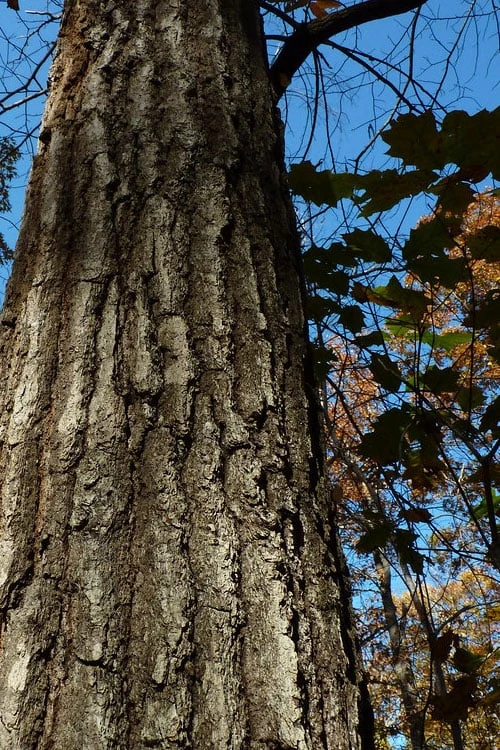
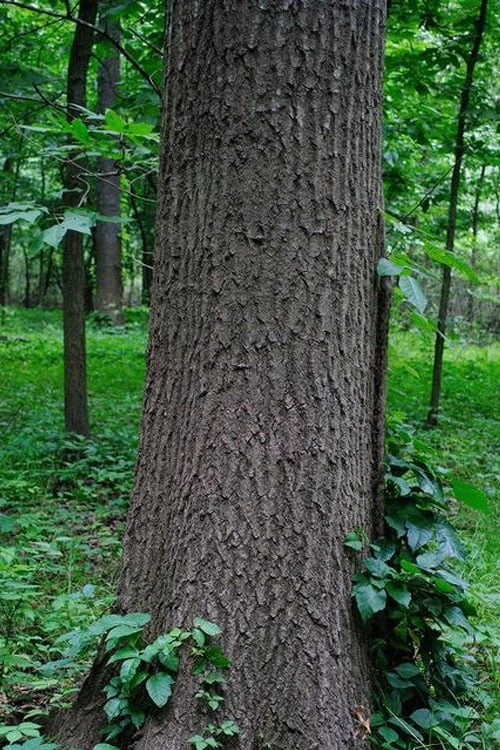
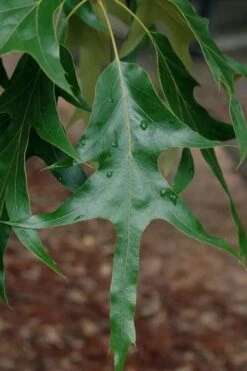
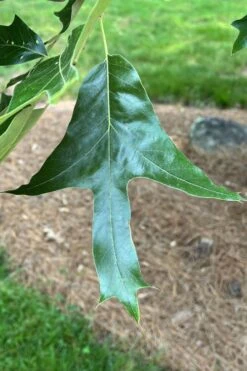
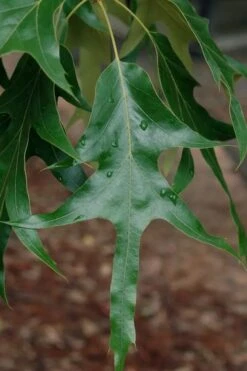
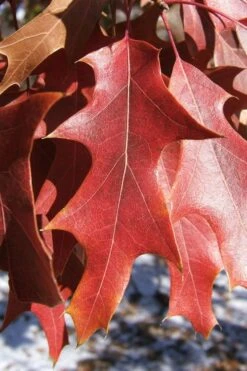
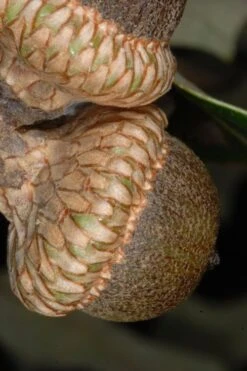
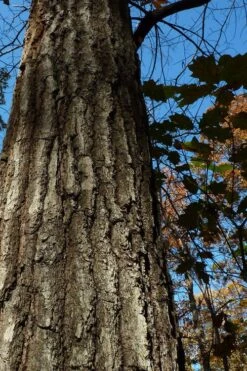
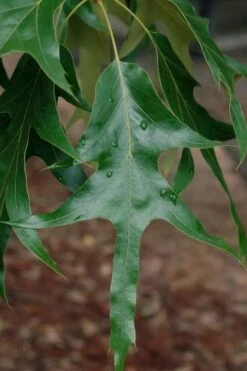
One of the faster growing of North American native oak trees, the Southern Red Oak can add up to 2 feet or so in height per year reaching 60 to 80 feet tall and 40 to 50 feet wide at maturity with a rounded crown. The large leaves up to 9 inches long come in two different types on the same tree. One has 3 to 5 irregularly shaped bristle-tipped lobes with the terminal lobe being longest. The other type is pear-shaped with 3 rounded lobes towards the end. The dark green leaves turn a reddish brown in fall. Insignificant flowers occur in spring in the form of catkins which are followed by small, rounded, copper-brown acorns wearing a light tan top cap. Young bark is smooth and light gray becoming deeply furrowed and dark grey with age. As is with most oak trees, the Southern Red Oak has many benefits to wildlife, supporting many species of butterflies, moths, birds and mammals. It is highly adaptable to most any soil type, including clay and poor soils, provided the site is well drained. It is very drought tolerant when established but will also tolerate occasionally flooding. This long-lived and no-maintenance oak is ideal for use as a large shade tree in residential areas and parks or in groupings or groves for forestation and reclamation projects. Its high tolerance of air pollution and poor soil makes it a good selection for urban areas.
Wildlife Benefits
The wildlife benefits of the Sothern Red Oak are numerous. It is an excellent source of food for many wildlife species including deer, black bears, turkeys, woodpeckers. squirrels, rabbits, raccoons and many other species of smaller mammals and birds. It also supports a wide variety of Lepidopteran. You may see moths and butterflies such as Imperial Moth, Banded Hairstreak, Edward’s Hairstreak, Gray Hairstreak, White-M Hairstreak, Horace’s Duskywing and Juvenal’s Duskywing.
Landscape & Garden Uses
Growing 60 to 80 feet tall and 40 to 50 feet wide at maturity, the Southern Red Oak is ideal for use as a shade tree around the home and outdoor living spaces. When planted on the west side of a home the shade it provides can significantly reduce cooling costs. Also excellent in groupings for forestation or reclamation projects. A fine addition to the Xeriscape (low water needs), native plant gardens and wildlife gardens where the acorns are eaten by squirrels, chipmunks, deer, wild turkeys, blue jays, red-headed woodpeckers and many other wildlife species. Also provides a canopy for shelter.
Suggested Spacing: 60+ feet for space between trees
Growing Preferences
The Southern Red Oak is very easy to grow in most any moist but well-drained to dry soil of average fertility and full sun to part shade. It prefers an acidic soil ranging from 4.0 to 6.0 on the pH scale. Established trees are exceptionally drought tolerant. We suggest at least 5 or more hours of direct sunlight per day. A very low maintenance tree that requires no pruning unless you want to remove some lower branches to expose more trunk. Young trees will benefit from fertilizer however older trees can usually get the needed nutrients from the soil and rain water.
Note: Find helpful advice from our experts under the Planting & Care tab above on desktop screens and below on mobile phones.
Plant Long & Prosper!
Meet The Wilson Brothers & Staff
Questions? Contact Us
Be the first to review “American Elm Tree (Ulmus Americana) – 3 Gallon Pot”
Related products
Sale!
NATIVE PLANTS
Original price was: $69.97.$48.98Current price is: $48.98.
Sale!

Original price was: $44.97.$31.48Current price is: $31.48.
Sale!
Original price was: $159.97.$99.99Current price is: $99.99.
Sale!
Original price was: $43.97.$30.78Current price is: $30.78.
Sale!
NATIVE PLANTS
Original price was: $31.85.$22.30Current price is: $22.30.
Sale!

NATIVE PLANTS
Original price was: $89.97.$62.98Current price is: $62.98.
Sale!
NATIVE PLANTS
Original price was: $49.97.$34.98Current price is: $34.98.
Sale!
NATIVE PLANTS
Original price was: $79.97.$55.98Current price is: $55.98.
Reviews
There are no reviews yet.